Retractions, Paper Mills, and the Crisis of Research Integrity: Is the Race to Publish Undermining the Purpose of Research?

Introduction: When Publishing Becomes More Important Than Research
Research plays a major role in the discovery and establishment of new knowledge. It addresses numerous societal challenges. The understanding of existing and new knowledge is critical to shaping the future of science and technology. Given the importance of scientific research, the international community of scholars has begun to ponder: are we conducting research to discover something of substance, or are we pursuing research to be able to publish yet another paper?
There has been a substantial increase in scientific publications. Different actors within the scientific community encourage, acknowledge, reward, or appraise research and scholarship differently, including researchers’ publication records. Universities promote research outputs and compete for ranks; researchers compete for promotions and funding. Consequently, the emphasis on volume rather than substance in the scientific community has grown.
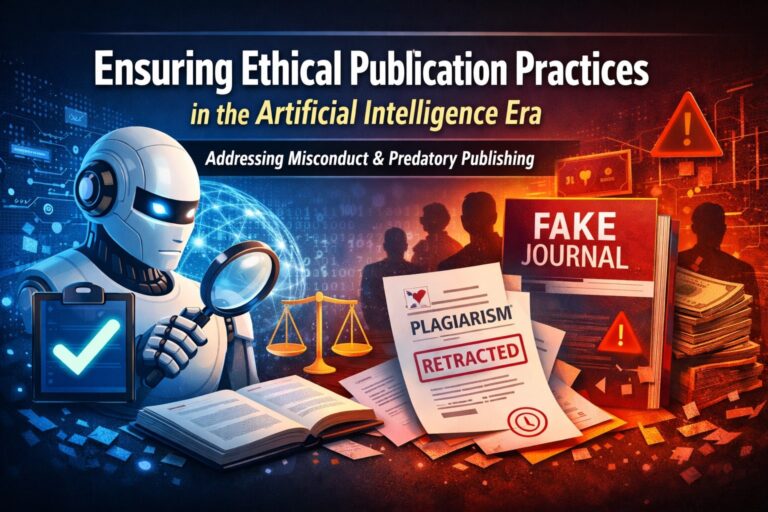
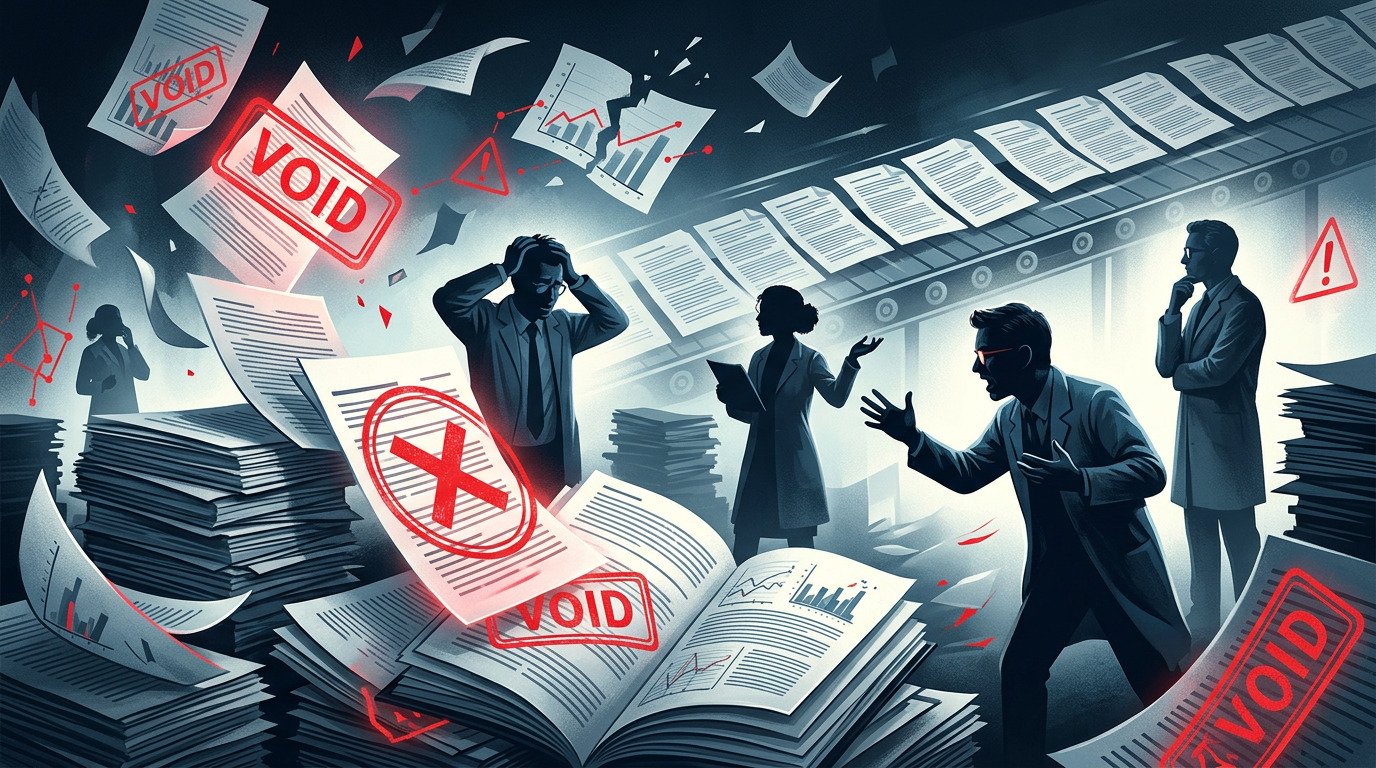
A telling result of the emphasis placed on the volume of publications rather than their substance is the alarming rise in the number of publications that have been retracted. Publication retraction is an editorial process to express concern regarding the reliability of a published paper. It casts doubts on the integrity of researchers, the credibility of peer review, and the scientific judgment of academic institutions.
The focus of the discussion should not be to deter research. This discourse is to re-emphasize that the purpose of research is to expand the body of reliable and reproducible scientific knowledge that meets social needs.
Retractions: A Growing Concern for the Research Community
A retraction is issued when the findings of a published research article are called into question, and the article is withdrawn from the scientific record. There are many reasons why an article may be retracted. Unreliable research findings may be due to data fabrication or falsification, image manipulation, duplicate publication, ethical issues, compromised peer review, authorship issues, serious errors, or plagiarism.
Rising numbers of retractions recently indicate how serious the issue is becoming. A 2022 study that analyzed academic retractions forecast a sharp increase in retractions from 2020 to 2023. Other irregularities involving the data, problems with the images, and the use of paper mills were the main contributing factors to the increase.
An unprecedented example occurred in October 2026, when the IEEE retracted 1,417 conference papers in a single action. The paper mill concerns related to the retracted articles demonstrated that while questionable research practices may have historically been the domain of predatory or fringe journals, manipulation of scholarly publishing has become pervasive.
One important difference is that an increase in retractions does not always mean an increase in misconduct in research. More effective detection systems, image screening technology, and research integrity investigations have resulted in the detection of previously undetected cases. Thus, editors and members of the research community have also become more vigilant.
In this respect, retraction has both positive and negative implications. It indicates a problem with the research and publication system, but it also indicates that the scientific community has become willing to correct the record.
We must draw a distinction: not all research errors constitute research misconduct. There are many reasons for a research error, including but not limited to equipment malfunction, laboratory contamination, etc. There are also instances when a researcher might have reasonably believed he or she was conducting research appropriately but later learned he or she had misunderstood or misinterpreted the data and procedures.
Misconduct occurs when a researcher manipulates evidence to create a specific outcome, conceals errors, or intentionally neglects their integrity to compromise scientific procedures.
Why Are Retractions Increasing?
Several interrelated factors have accelerated this situation.
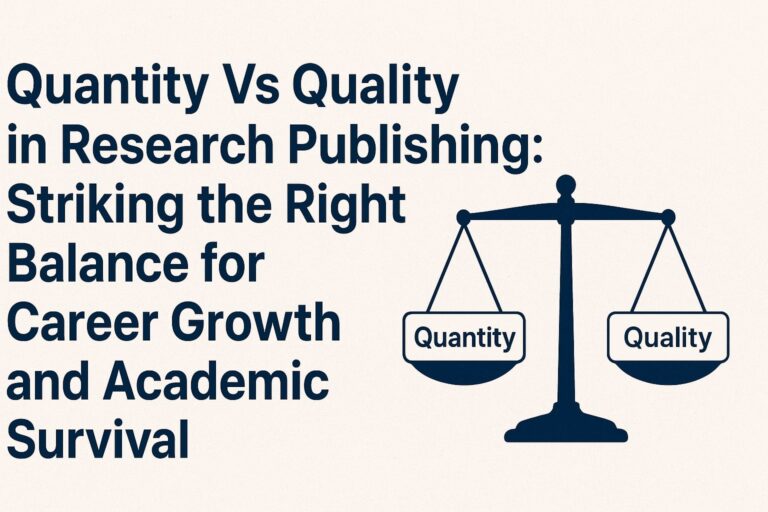
1. Pressure to Publish: Although the phrase Publish or Perish may have become a cruel reality, it is important to recognize the more positive goal that this phrase expresses. Indeed, to be competitive in the job market, junior researchers are expected to have a track record of publications in order to secure a permanent position or a research grant. In the process, researchers can become preoccupied with the quantity of their publications over the quality and significance of their research.
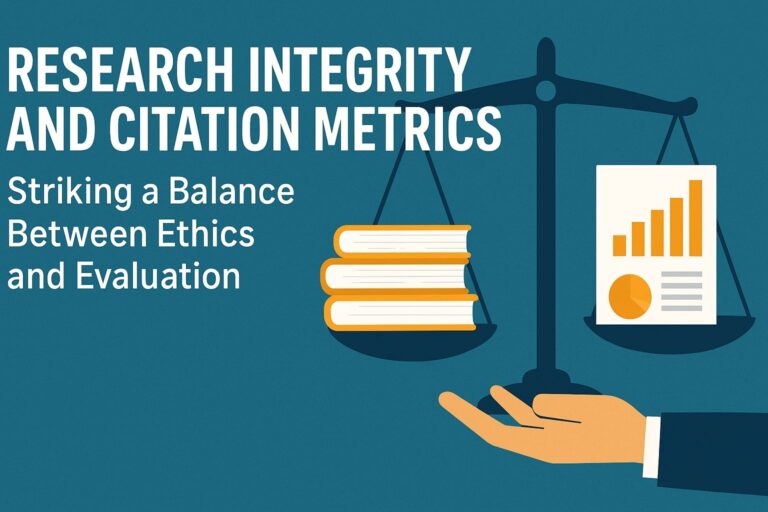
2. Overemphasis on Publication Metrics: In research, the quality of the work is more important than the quantity of publications. Publishing many papers in low-impact-factor journals does not automatically make a researcher excellent or a significant scientific contributor. Likewise, a cutting-edge, high-impact research contribution doesn’t necessarily have to be published in a top-impact-factor journal to make it excellent.
3. Inadequate Research Training: Researchers may also lack training in certain ethical and research practices, which can lead to unethical practices such as questionable data practices and publication.
4. Compromised Peer Review: Reliable research is assessed by other researchers. In fact, researchers have a mutual obligation to uphold quality control and to prevent the publication of poor research.
5. Commercialization of Research and Publication: When established researchers become entrepreneurs, they offer publication services that are of interest to the least scrupulous agents in the research ecosystem.
Researchers must be able to tell the difference between legitimate editorial assistance and businesses offering guaranteed publication, fabricated research, or purchased authorship.
Paper Mills: An Organized Threat to Scientific Integrity
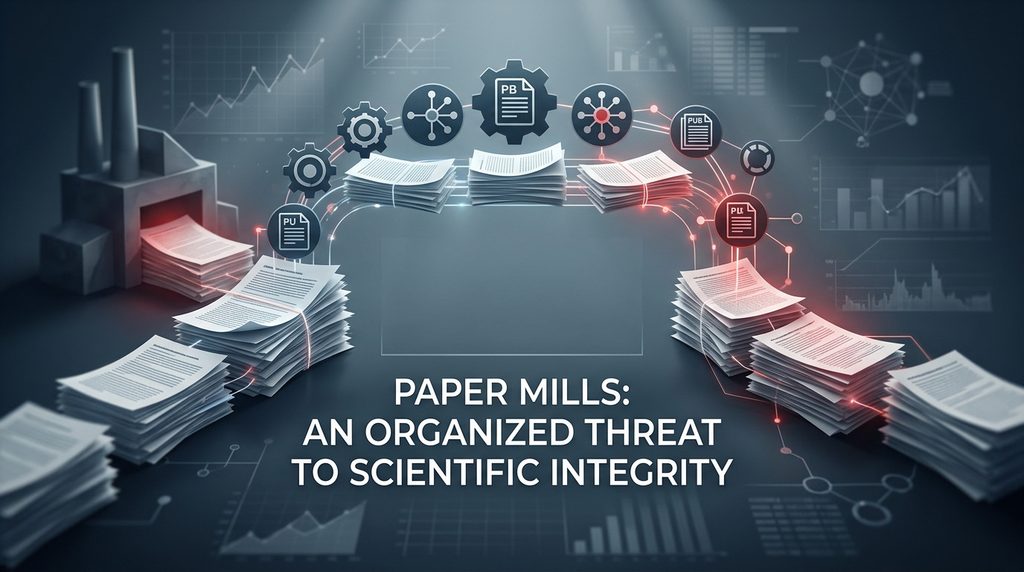
One of the more concerning trends in academic publishing is the rise of paper mills.
Paper mills are organizations or commercial networks that generate or alter research manuscripts and sell a range of related services, including the sale of authorship in manipulated or fabricated research, altered or fabricated data, and even entire manuscripts.
Their primary business goal is to capitalize on the growing need for researchers to publish in order to advance their careers.
The services offered by paper mills generally fall into the following categories:
This includes preparing manuscripts that involve fabricated or manipulated experimental results or outcomes.
Using datasets, images, or graphs from unrelated studies is also prohibited.
Generating or altering citations to create a false appearance of research, scholarly support, or integrity is also prohibited.
They may also manipulate peer review by suggesting false identities or using inappropriate or compromised editorials.
They may also provide guaranteed publication in journals or proceedings.
What makes paper mills so dangerous?
The consequences of a single paper published by a researcher through a paper mill extend far beyond that one paper.
First, they corrupt scientific literature. Researchers may unwittingly build upon fabricated findings.
Second, they waste research investments. Governments, universities, and funders invest public funds in research. Fabricated findings dissipate that scientific value.
Third, they threaten real researchers. People who have dedicated years to collecting scientific data may now face competition from fabricated findings.
Fourth, they endanger the institution’s reputations. When an institution conducts fraudulent research, it also tarnishes its own reputation.
Fifth, they threaten the general public’s welfare. In fields like medicine, environmental science, and agriculture, unreliable data may influence public policies and decisions.
It is very dangerous that fabricated research may take years to detect. In the meantime, other studies may cite it.
Paper mills are an organized threat to the trust of the scientific community.
Where Is Research Going? The Changing Landscape of Scientific Investigation
In light of the concerns raised, what can we expect of scientific research in the future? It is certain that science is going through significant changes with the emergence of AI and other advanced analytical tools, as well as changes in the ways in which research and science are interacting (such as through big data and digital research infrastructures and automation).
Scientific research is tending toward:
1. Interdisciplinary research: The cross-pollination of various fields of research will help understand climate change and other global challenges such as loss of biodiversity, water scarcity, pollution, and new emergent diseases.
2. Artificial Intelligence and Machine Learning: Although artificial intelligence (and deep learning in particular) can help researchers do literature reviews and identify complex environmental and spatial patterns, information and evidence generated by AI should be treated with caution and double-checked.
3. Open science: There should be no barriers when it comes to publishing science.
4. Evidence-based research: Generating evidence and better understanding the areas where the existing knowledge gaps are should be the primary focus of research.
5. Responsible innovation: Contributions to society, the environment, and future generations should be the measure of research, instead of what gets published.
There is evidence to suggest that the new (and rapidly evolving) environment of research is going to demand a more ethically responsible researcher.
1. Don’t research topics just because they’re trendy or easy to publish.
2. Conduct a review of the literature: Summarize the main findings of prior publications. Identify gaps in the body of research and the constraints of prior research.
3. Propose an appropriate methodology: Design experiments appropriately, select sample sizes and controls appropriately, and apply sampling, analytical, and statistical methods appropriately to the research objectives.
4. Retain the integrity of research data: Maintain observations and research records. Never fabricate, manipulate, or omit research data to support a hypothesis.
5. Employ the appropriate use of statistics: Carefully analyze data and interpret results in light of the research objectives.
6. Comply with ethical standards of the research: Obtain approvals and permissions and provide informed consent as required. Ensure the safety and welfare of research subjects.
7. Keep authorship clear: Each author must make an intellectual contribution and accept responsibility for the work’s integrity. Gifts and purchased authorship should not occur.
8. Use AI wisely: AI has the potential to improve and organize literature and increase the speed of research. It is, however, the responsibility of the researcher to verify all references, calculations, and interpretations. AI should not be used to substitute researcher responsibility and intellectual effort.
9. Choose the most appropriate journal for your work.
Do not choose a journal based solely on promises of rapid publication and impact factor.
10. Accept and expect null and surprising results. A study can be successful even if a hypothesis is not confirmed.
11. Emphasize reproducibility.
12. Delay publication of additional related works until the current work is complete. A single well-designed, analyzed, and reported paper is more valuable than several incomplete papers.
Responsibility of the Researcher: Integrity Begins with the Individual
Researchers have a primary responsibility for maintaining research integrity.
A researcher should know that scientific publications are not individual achievements; they are additions to the body of collective knowledge of humanity.
A researcher should:
Not fabricate, falsify, or manipulate research data.
Avoid plagiarism, duplicate publication, and inappropriate self-citation.
Not purchase authorship and be involved in paper-mill activities.
Declare interests, and acknowledge funding.
Preserve research data and provide them when required.
Cite sources and acknowledge contributors, collaborators, and assistants.
Correct mistakes quickly, including through retractions and corrections if necessary.
Refuse to publish work that does not meet scientific standards or integrity.
One should be able to say ‘I do not know’ or ‘my results do not support the hypothesis’ or ‘I made an error’; such declarations are signs of professional and scientific integrity, not weakness.
Responsibility of the Research Supervisor: A Mentor, Not a Publication Manager
A research supervisor is pivotal for a scholar’s academic and ethical development.
In some research situations, the relationship between a supervisor and scholar devolves to an excessive preoccupation with the number of publications, ranking of journals, and fulfillment of academic requirements.
A supervisor is more than an assigner of research topics and expects manuscripts.
A supervisor should:
1. Develop scholars’ understanding of research methodology, experimental design, and data analysis.
2. Guide scholars on research ethics and preventive measures against plagiarism.
3. Supervise and monitor experimental data and research
4. Help scholars’ understanding of each aspect of a research manuscript before it is published.
5. Abhor gift and purchased authorship
6. Guide scholars to publish in ethically and scientifically appropriate journals.
7. Be answerable to scholars in creating an open and trusting environment where scholars have the freedom to report any misconduct and discuss any difficulties concerning their research.
A research scholar should never be treated as a research publication proxy.
Same is true with research supervisors.
A competent supervisor creates independent researchers, not publication-dependent scholars.
Responsibility of Universities and Research Institutions
Universities and research institutions must acknowledge that research integrity is an institutional responsibility.
They should develop effective research ethics and integrity committees, provide training, implement clear research evaluation processes, and motivate the retention of research data.
Other steps should include:
Formulating clear procedures for investigating research misconduct.
Establishing confidential processes for reporting research integrity concerns.
Providing access to statistical and methodological advice and guidance as well as ethics training and support.
Conducting internal research quality assessments prior to manuscript submission.
Recognizing and supporting research, innovation, and other valued contributions.
Protecting whistleblowers and ensuring the integrity of investigations.
Eliminating unrealistic research annual publication targets.
Research integrity audits and assessments should focus on the quality and substantive contribution of research rather than on the number of publications.
Responsibility of Government and Funding Agencies: Reform the System, Not Just the Researcher
Governments and funding agencies influence the policies, incentives, and evaluation methods in which researchers work. So they also bear a special responsibility regarding research quality.
If the academic system particularly rewards publication quantity, it cannot expect researchers to remain unaffected by that pressure.
Governments and regulatory bodies could consider the following reforms:
1. Reform academic evaluation: Research evaluation systems should consider criteria other than quantity. Promoting and recruiting researchers and awarding research funding should give priority to research quality, originality, methodological integrity, and impact.
2. Promote responsible research assessment: There are several international initiatives focused on research assessment that highlight the need to evaluate research based on its own scientific merit rather than through journal impact factors and other proxy metrics.
3. Establish national research integrity frameworks: Frameworks should help establish definitions for research integrity and research misconduct and outline institutional processes for investigating research misconduct.
4. Increase research funding: Researchers should have sufficient funding and access to laboratory space, scientific and technical staff, and sufficient time to conduct important research.
5. Encourage quality over quantity: Funding and promotion systems should reward high-quality and innovative contributions, including research data, software, and other research-related outputs, such as patents and socially relevant research and policy innovations.
6. Establish research integrity training: Research integrity and publication ethics should be incorporated into the training of research students and faculty.
7. Act against paper mills: Relevant regulatory authorities, university administrations, publishing houses, and law enforcement authorities should work together to identify organized, fraudulent publication service providers and protect the researchers from such service providers.
8. Protect genuine researchers: Allegations of misconduct should be addressed based on objective, verifiable, and valid evidence and in an impartial manner. Researchers should be provided with an opportunity to respond to misconduct allegations.
The Role of Journal Editors and Publishers
Editors and publishers serve as the gatekeepers of scholarly communication. Their responsibility doesn’t end with the decision to accept or reject a manuscript.
They need to guarantee that peer review remains independent and that they manage potential conflicts of interest. Research ethics and malpractice should be investigated, and reviewed manuscripts should be verified.
Editorial offices must reinforce controls for:
Inappropriate textual similarity and plagiarism.
Image manipulation, duplication, and fabrication.
Inconsistencies and bizarre statistical data patterns.
Inappropriate or fabricated citations.
Authorship and affiliation irregularities.
Ethical approval and informed consent.
Reviewer identity and integrity.
The journal should refrain from considering every correction as research misconduct. A clear and structured correction policy encourages the researcher to correct and editorials should publish corrections and retain trust in research.
Retraction should be a last resort when research records need to be corrected and literature needs to be retracted.
A Practical Research Integrity Checklist
Prior to the final submission of a research paper, every researcher and supervisor must be able to respond affirmatively to the following questions:
1. Is the research question scientifically meaningful?
2. Are the data original? Are they authentic and verifiable?
3. Is the methodology appropriate and reproducible?
4. Are the statistical analyses correct?
5. Have the references been checked against the original sources?
6. Are all authors genuine contributors?
7. Have appropriate ethical approvals and permissions been obtained?
8. Have possible conflicts of interest (e.g., AI tools, funding, conflicts of interest, etc.) been disclosed?
9. Is the journal suitable for the work?
10. Can all authors defend the findings and conclusions with confidence?
The final submission of the paper should be deferred until all of the above-mentioned questions receive affirmative answers.
Conclusion: Let Research Be Driven by Curiosity, Not Compulsion
Threats to the integrity of academic publishing, such as retraction, paper mills, and manipulation, challenge the research publishing ecosystem. However, these threats can be transformational for research if barriers, such as the obsession with publishing rather than the quality of published research, are effectively removed.
Removing barriers can be achieved through efforts by researchers to be objective, supervisors to be responsible, institutions to foster ethical research environments, journals to practice rigor in research publishing, and governments to reward excellent research and dispel negative attitudes toward academic publishing.
Rapid advances in research, such as the increased use of artificial intelligence, sophisticated instruments, and research collaborations, can improve research. However, human responsibility can never be replaced. The future of research will depend on the extent to which we can maintain the trust of the research community rather than on the number of publications.
Let us pursue scientific value over paper value. Fraudulent scientific research does not conform to the ideals of scientific research. One authentic research paper is more valuable than ten fabricated publications. One authentic scientific publication can benefit generations, whereas one fraudulent publication can mislead generations and harm the scientific community.
The real success of a researcher is not measured by the number of publications attached to their name but by the trust, knowledge, and positive change their research leaves behind.
My publications or visit my LinkedIn