The AI Trap in Academic Publishing: How Journals Will Spot AI-Authored Manuscripts in 2026

“Artificial intelligence can assist scientific writing, but it can never replace scientific thinking”
Introduction
The development of artificial intelligence (AI) in academic writing poses both exciting, new opportunities and a host of new challenges to scholarly publishing. There will be over 2026 AI-integrated language technologies that have automated processes and elements of a researcher’s workflow. In 2026, AI technologies will have facilitated rapid drafting and enhanced linguistic accuracy and global knowledge. While the technology will have many benefits to writing and scholarly publishing, it will also create new and unprecedented challenges and threats to the scholarly publishing ecosystem.
Challenges and New Threats
Of the many previously unknown challenges that AI will create for scholarly publishing, perhaps the most concerning is the submission of manuscripts written in whole or in part by AI systems and then posted without careful consideration and adequate disclosure of the true nature of the contributions made by the AI and the human authors, or by a combination of the two.
AI Trap Explained
The AI Trap is an illustration of one aspect of the many complex and challenging issues caused by AI that scholarly publishing will have to address. The AI trap is not the only issue scholarly publishing will have to face. In addition to the many previously unknown and challenging issues that AI will create for scholarly publishing, there are other issues that scholarly publishing will also have to deal with, separate from the many previously unknown and challenging issues that AI will create for scholarly publishing. The AI Trap is a depiction exemplifying one of the many complex and challenging issues created by AI that scholarly publishing will have to confront and address.
Main Idea
The AI Trap presents one of the many complex and challenging issues that AI will create for scholarly publishing, which scholarly publishing will need to address. In addition to the many previously unknown and challenging issues that AI will create for scholarly publishing, there are also many other issues that scholarly publishing will have to address.
AI Technology’s Evolution and Impact on Apropos AI-Material Generation (2020-2026)
The trend of AI in scholarly publishing shows that advancements in the sophistication and accessibility of AI models occur rapidly:
2020-2022: Early versions of AI-based text generators become available to the public. However, the models often struggle to generate text that captures the nuances of the academic domain accurately.
2023-2025: More AI tools are available. These tools focus on AI-based paraphrasing, literature reviews, data reporting, and hypothesis generation. Non-native English speakers and people who have just started working in research will benefit the most from these services.
2024-2026: AI text will lead to more high-profile retractions of journal articles. This will trigger a system-wide reform. Some journals will start to use AI tools to verify the originality of text, and these journals will create policies about the use of AI.
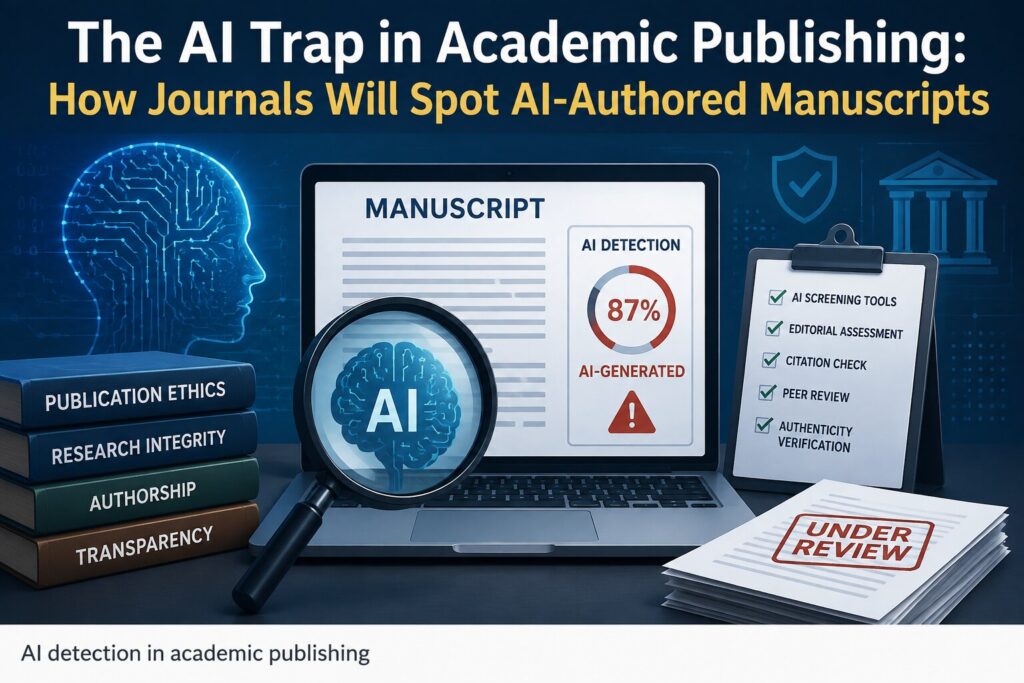
Reasons for AI Use
There are many reasons for using AI to write journal articles.
Time Constraints: Frequent publications help researchers win grants and earn tenure. The time constraint provides incentive(s) to use AI.
Language Aid: AI will help with the language for researchers who do not write in English as their first language.
Data Integration: AI can synthesise large volumes of data and pull together the findings from multiple pieces of literature.
Edge: In extremely competitive and fast-changing fields, some researchers even draft, edit, and generate outlines using AI.
AI tools encourage users to blur the distinction between using AI as a tool and using it to write text for them.
Anticipated AI Tools and their Functions in 2026
AI tools specialise in research and can easily adapt to different areas of research focus.
Quillbot: This tool aids researchers in paraphrasing, editing, and clarifying written text and improving editing.
ScholarAI: Literature reviews, citation management, and extraction of key findings become automatic with this tool.
DataWrite Pro: Automatic creation of publication-ready narratives of results stemming from statistical datasets is possible with this tool.
ProofX: This tool offers technical editing for STEM and medical research, as well as verification of terminology and proofreading.
AI Abstractor: This tool provides automatic summaries for dissertations, theses, and long-form research articles.
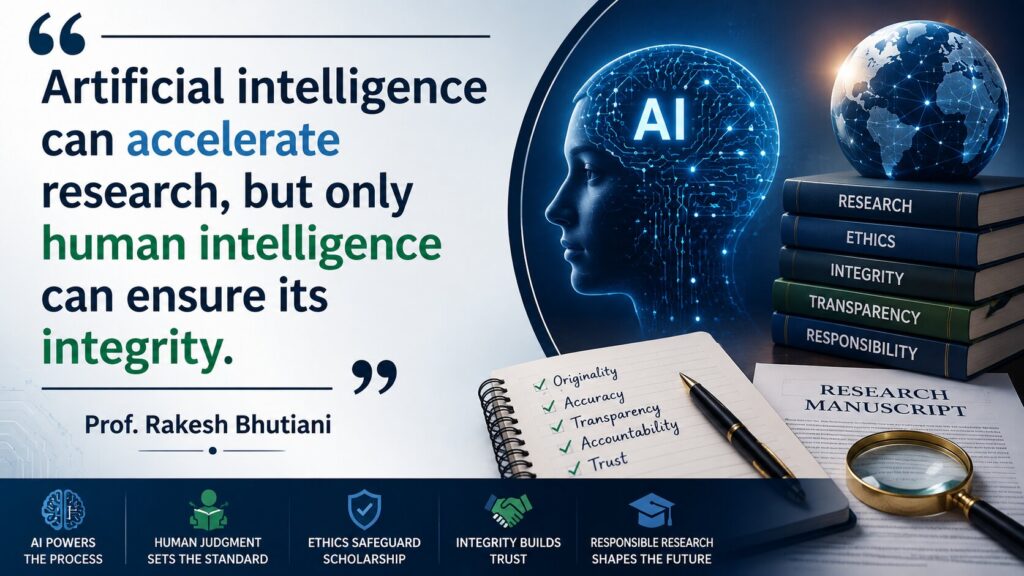
The Predicted Advantages and Disadvantages of AI Integration
Advantages:
AI integration is expected to improve the quality of language and the overall clarity of the manuscripts.
AI integration is expected to shorten the drafting and revision timelines.
The projected impact of AI integration is expected to improve the overall accessibility of research for the global research community.
The expected positive outcome of AI integration is that it will enhance automated citation management and the automated generation of reference lists for research publications.
Disadvantages:
The negative outcome of over-reliance on AI integration is expected to adversely impact critical thinking.
Assessing the author’s ownership of the content and determining the extent of AI involvement will remain a challenge.
The negative outcome associated with the expected positive impact of AI integration is expected to adversely affect the overall integrity and ethics of research publications.
Ethical and Policy Challenges in the AI Era
Plagiarism, Authors, and Misconduct
There are traditional definitions of plagiarism that state it occurs when an individual uses the work of another person without permission. The output from an AI program has made this more complicated. Although the sequencing of words is technically “unique” in an AI program output, it does not necessarily add anything of value intellectually. The main issues are:
Transparency: Did the author fully disclose all AI-generated content?
Intellectual ownership: Does the manuscript reflect the author’s original thoughts and critiques?
Authorship criteria: Can an AI programme be recognised as a co-author, or should AI always be cited as a tool?
AI destroys transparency, integrity, and originality in the field of research and publication. The most reputable organisations in this field (the Committee on Publication Ethics (COPE), the World Association of Medical Editors (WAME), and the Council of Science Editors (CSE)) now emphasise that authors must be responsible for the integrity, novelty, and interpretation of their work. AI, lacking agency and responsibility, cannot fulfil these criteria.
Institutional and Publisher Responses
Universities and publishers have rapidly updated their policies to address the AI trap:
There should be a mandatory disclosure of any AI tools used in manuscript preparation, specifying their functionalities and extent.
There should be an explicit prohibition of AI-generated sections pertaining to original research and analysis of results and data.
There should be a routine screening with AI detection software for all accepted manuscripts.
Continuous implementation of retraction and public notices of violations, along with other professional censure, should also be ensured.
Major Incident Studies: Lessons Learned from High-Profile Events
Phantom Thesis Scandal: 2024 (EU)
A prestigious European university revoked a doctorate after an investigation indicated that nearly 80% of a dissertation’s text was generated via a commercial AI text-generating tool. This case has prompted many universities to re-evaluate how they submit and defend dissertations.
Ghost Author Incident: 2025
A highly regarded scholarly medical journal published a clinical trial study paper that acknowledged an AI system as a co-author. After public backlash and an internal review, the journal instituted a policy that limited authorship to individuals who took responsibility for the integrity and accuracy of the work.
Fabricated Methods Case: 2026
An AI text-generating tool originating from a popular AI template was found to generate identical methodological language in dozens of engineering papers. The result was a wave of retractions across the journals involved, as well as the adoption of new policy requirements for methods disclosures. Additionally, new joint equities databases for cross-journal reviews were created.
Stylometric systems can identify outliers and provide probability scores for review by humans.
Entropy, Perplexity, and Statistical Cohesion
AI-generated text tends to exhibit less entropy (predictability) and perplexity than human-authored text. Detection tools focus on:
Distribution of phrases and words: A distribution that is as uniform as possible, without stylistic “noise,” is appreciated.
Probability of repetitive phrasing and strings:
Textual cohesion: Logical and thematic connections among different sections of text.
These metrics help locate manuscripts that contain syntactically and grammatically correct text generated by an algorithm that imparts the text a smoothing effect.
Semantic Coherence and Topic Modeling
AI-generated papers usually have a low level of thematic cohesion and engagement. Some journals have introduced the following:
Topic modelling: Algorithmic methods for analysing the conformity of the logical order of ideas with the norms of academic discourse.
Depth of argument assessment: Evaluation of the level of hypothesis construction and the synthesis and analysis of the relevant literature.
Watermarking, Digital DNA, and Cross-Submission Comparison
The most advanced language models use subtle and persistent systematic watermarks, highly irregular patterns of word and token choice, grammar, and phrasing. Journals can look for these, sometimes spotting the specific AI model or version. Furthermore,
Document fingerprinting: Different AI writing tools may leave unique but persistent stylistic marks that journals can detect.
Cross-journal databases: repositories that allow a cross-comparison of submitted manuscripts for identical AI-generated passages or repeated templates.
Forensics on the Metadata and Revision History
Besides sample text analysis, forensics has begun reviewing document metadata. Journals now analyse the following:
Creation and edit timestamps: large blocks of text appearing suddenly or editing timestamps that are implausibly short imply AI origin.
Revision logs: a lot of human writing shows a slow, gradual, and iterative process of writing; AI text usually appears in a final version and is minimally changed.
Human-in-the-Loop Review
Manuscripts that are flagged are reviewed for a second time by an editor or domain expert who looks for:
Domain-inappropriate language
Shallow and generalized reasoning
Inconsistent referencing and unrealistic interpretation of data
This hybrid method is meant to provide the best possible balance of time invested and accuracy achieved.
This balances both false positive and false negative detection.
The Cat-and-Mouse Game
Evasion Strategies
Improved detection systems meant better systems for evading detection.
Prompt engineering: Crafting prompts in a specific way that the output will be either more intelligent or more erroneous.
Layered paraphrasing: Passing content through multiple AI tools to remove stylistic fingerprints.
Human-AI hybrids: Authors manually edit or add to AI outputs to cover obvious signs.
Adversarial Attacks on Detection
Some researchers try to evade detection by intentionally introducing a certain level of randomness into their input or by imitating statistical features of human writing that detection systems will have difficulty recognising.
Complete transparency is required for the documentation of editorial AI practices for both legal English editing and language editing.
The formation of editorial AI ethics committees would provide a way to revise and update policies as we adapt to new technologies.
Editorial and Institutional Practices
The latest detection systems will comprehensively read all submissions.
More detailed author declarations will have specific questions regarding the use of AI.
Reviewers will be continuously educated on AI detection.
When there is suspected use of AI, we will engage authors in conversation.
Community Education and Engagement
AI literacy programmes for researchers, editors, and students will be offered.
Responsible AI use workshops.
Research ethics will contain AI use and literacy modules.
Dynamic Policy Adaptation
Policies should be reviewed and adapted yearly. It would require collaboration across publishing, research, and AI industries.
The Synthetic Review Crisis (2023):
Among the first instances to result in the use of stylometrical and semantic coherence detection methods was a review article that was cited frequently, then retracted by a leading biology journal after it was found to be generated almost entirely by a tool called ScholarAI, having undergone only superficial human author edits.
The Auto-Translation Dilemma (2024):
An article published in a linguistics journal, which was later retracted, provided an even more complex blend of self-plagiarism and borderline original scholarship when it was found to be AI-translated and AI-paraphrased from a previously published article in another language.
As a result of the above, the university considered corrective instead of punitive measures. This case demonstrates that, in the absence of a clear legal framework for such cases, there will be proactive, ethical AI-based training in academia to establish a solid ethical basis.
The Future of AI in Academic Publishing
Responsible Integration
While AI will become a part of academic writing, the scholarly community agrees that it should assist, not replace, human critical thinking and rational contributions. Responsible integration also means that we must clearly define and illustrate the boundaries of integration and sustain engagement with the integration framework.
The Ongoing Arms Race
The relationship between generative AI and detection systems will remain adversarial, with each side pushing each other to improve systems and frameworks. Publishers need to innovate not only in technology but also in policy, training, and integrative collaborations.
The Question of AI Authorship
Some journals are starting to implement “AI assistance statements”, which describe the use of AI in preparing manuscripts. Full authorship is reserved for human authors, not AI, as there must be a human accountable for the work’s scholarly merit and integrity.
Conclusion
Artificial intelligence (AI) has embedded itself in modern research practices, changing how scholars search, analyse, draft, and communicate their scientific research. While these tools have tremendously improved the efficiency and the sufficiency of research, they have presented numerous complex challenges on the ethical and editorial continuums. The widespread use of AI has eroded the demarcation line separating legitimate technological aid from unacceptable machine-generated authorship. This has complicated the task of editing and publishing research.
AI optimises researchers’ work. From finding and analysing relevant literature to drafting and communicating scientific research, AI has transformed every aspect of modern research practice. However, the integration of AI into research practices has introduced numerous complex challenges on the ethical and editorial continuums. These challenges include, but are not limited to, the massive increase in the volume of literature, the erosion of norms of integrity, the dangers presented by the blending of fact and fiction, and the rise of alternative ways of knowing and communicating.
Researchers face many barriers, but these also help them work with AI and use their time and resources more effectively. AI can make written work more professional and easier to read. AI can help researchers locate and make sense of literature; translate, summarise, organise and structure it; and programme and analyse statistics. AI cannot think and reason for you, and it cannot do your scholarly writing for you.
Final Takeaway
AI will not shape the future of scholarly publishing. AI will not harm scholarly publishing. AI is now a permanent part of every researcher’s job, and the key issue is how researchers will use it.
Researchers should not view AI as doing their job for them. Researchers should have original thoughts (research) and remain critical and ethical in their work. Researchers should ensure that everything they publish is original and based on trustworthy scholarly work. Ethical use of AI will not shape the future of scholarly publishing. The future of scholarly publishing will go to researchers that use the benefits of AI and are original, critical, and ethical about their work.
“The future of research belongs to those who combine human curiosity with technological innovation—without ever compromising ethics, originality, or truth”

My Publications or visit my LinkedIn