Good Research, Empty Pockets: The High Cost of Open Access Publishing


Good research deserves publication, not rejection due to the researcher’s inability to pay.
Picture a researcher studying polluted rivers for years, developing a low-cost, water-treatment technology, and documenting the loss of biodiversity and solutions to public health problems. Their work is science and society-based, and their findings are significant. After countless hours of analysis and editing, peer review, and acceptance of their manuscript, they’re ready to share their findings.
Finally, the last obstacle, the Article Processing Charge (APC).
The journal demands thousands of rupees—or occasionally several lakhs—to make the article openly accessible. The researcher has no institutional publication fund, no sponsored project, and no personal resources to cover the fee.
Years of effort have brought the researcher to the threshold of publication, only for financial limitations to stand in the way.
Is this what an equitable scientific publishing system should look like? Should the visibility of scientific knowledge depend on the financial capacity of the person who produces it?
The current state is a painful reality for thousands of researchers, especially those at resource-constrained universities and institutions. It is a painful reality.
Uncomfortable Truths of Open Access
With the advent of open access, many expected the barrier to the free flow of scientific knowledge to be removed and that there would be no geographical or institutional barriers to accessing scientific knowledge. It was expected that students, teachers, and other researchers, as well as policymakers and the general public, would be able to access scientific knowledge without any financial barriers.
However, something unexpected has started happening with open access.
To publish their research, scientists have to pay a publication (or processing) charge (also known as an article-processing charge (APC)). Increasingly, many open access journals and publishing houses have made the cost of publishing a scientific article the responsibility of the researcher (or the researcher’s institution). Many subsidized and newly established journals do not have the means to absorb these costs and instead transfer them to the researcher.
For well-funded researchers working in large institutions, the cost to publish may be absorbable or charged to a research grant. For a dedicated researcher working at a small college, state university, or underfunded institution, that same cost is unaffordable.
It has become uncomfortable to consider that we are creating a system that makes research financially inaccessible to those that need it most.
For many researchers, limited funds and support means that they must pay twice to have their research published.
Researchers purchase materials, conduct fieldwork, maintain laboratories, analyze samples, train students, and invest time and effort in writing manuscripts.
Often, taxpayers have already partially funded the research.
Once the research has been completed, scholars provide their intellectual work to publish their findings. Scholars write manuscripts. Academic editors make decisions and coordinate them. Peer reviewers assess manuscripts. However, after all of this intellectual work, authors may still be required to pay a publishing fee to make their work open access.
This practice raises many valid concerns.
Publishers have expenses, such as the maintenance of a digital publication platform. It is only fair that publishers recover reasonable costs. However, such expenses should not justify overcharging.
There are times when the cost of publishing exceeds what is reasonable.
The cost of publishing is disconnected from what researchers are able to pay. The publish or perish culture has encouraged exploitation. Considering the situation, the academic community is justified in questioning whether the publishing system is prioritizing financial interests over scientific communication and the service of science.
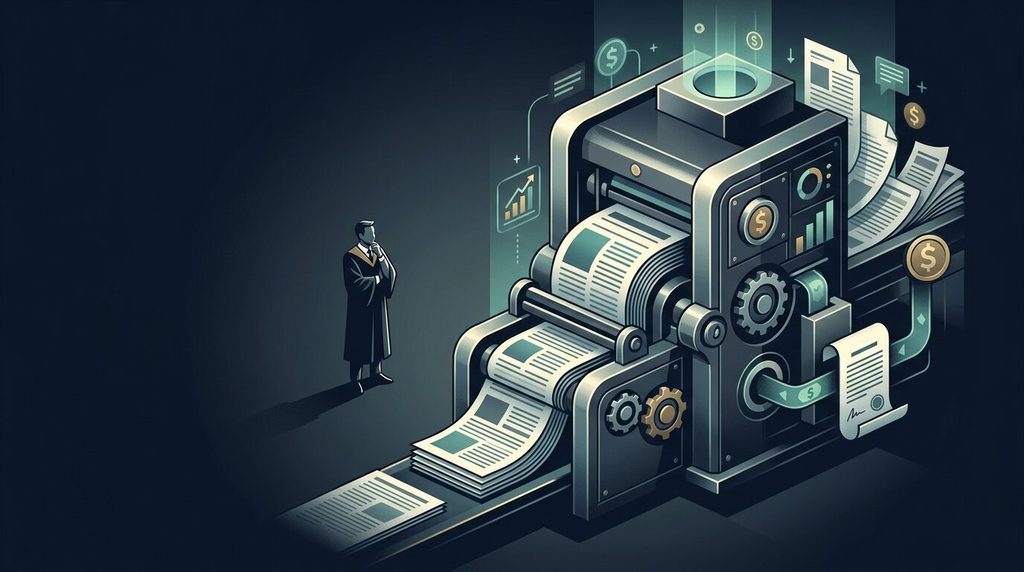
Who Benefits When Publication Becomes a Business?
The academic publishing industry allows select companies to earn impressive revenues and profits. Execs, shareholders, and other stakeholders of these organizations earn handsome rewards.
There is nothing wrong with a publishing company earning a legitimate revenue and paying publishing professionals fairly. The issue is with the commercial incentives that drive up prices, exploit the academy’s unpaid (or underpaid) work, and make scholarly publications unaffordable to the researchers who need them.
Consider the imbalance: a researcher may spend years generating evidence, while an institution may struggle to secure the funds needed to publish that evidence openly. Meanwhile, a publisher operating a highly profitable business may continue to increase prices without adequately considering the circumstances of less-funded researchers.
Criticizing people for earning high salaries in publishing is unjust. Nor is this argument a broad-stroke attack against for-profit publishers.
Charging excessively high and opaque fees, pricing structures that reflect a blatant disregard for restricting the free circulation of knowledge, and exploitative business practices should be the target of criticism.
Justifying how and why knowledge is made available is as equally important as justifying price. The services offered should equally reflect transparency, the costs associated with publishing, and pricing policies. If publication charges are extremely high, the justification for the fees should be made equally transparent to the authors and other stakeholders, and the charges should be explained in terms of real value delivered to authors and readers.
Regulatory bodies, research funding agencies, universities, and scholarly societies must develop mechanisms to counterbalance the pressure of exorbitant charges.
When determining how and where to publish taxpayer-funded research, we should fully consider its value.
Limitations should not be placed on researchers based on how well they are compensated. Restrictions should be placed on arrangements that blatantly impede the free flow of knowledge.
A Researcher’s Worth Cannot Be Measured by an APC
A basic rule must be brought back to academic publishing: the quality of a manuscript should be judged on its scientific value, not on how much the author can pay.
Peer review should assess originality, methodology, reliability, ethical compliance, and contribution to knowledge. An author’s financial circumstances should not determine the scientific worth of the work.
Journals must maintain financial sustainability. But that does not mean every author must personally finance publication.
Here are other viable options for distributing costs.
1. Support Diamond Open Access
Diamond open-access journals are funded by various entities (institutions, societies, libraries, or funding agencies) and do not charge readers or authors for access or publication, respectively. Authors retain copyright and the right to distribute their work.
2. Increase Institutional Publication Funds
Funding should be provided to early-career and untenured researchers, particularly those who do not have other means of publication support. Researchers should not have to choose between funding their research and making themself available to cover personal or family expenses or supporting the publication of their results.
3. Demand Fair Article Processing Charges
Publishers should adopt transparent and reasonable pricing for publication services. Discounts or waivers to researchers who can’t afford to pay should be offered.
4. Strengthen Green Open Access
Researchers can sometimes make an accepted manuscript available through an institutional repository or an appropriate subject repository, subject to the journal’s copyright and embargo policies.
This route may allow researchers to share their findings without paying for the publisher’s immediate open-access option. Universities should help authors understand their rights and deposit permitted versions of their work.
5. Encourage publicly supported publishing.
Research funders and governments should support sustainable publishing infrastructures and shared publishing platforms and should promote and fund non-commercial scholarly publishing initiatives.
When a research project is funded for public benefit, it is the responsibility of the funder to consider publishing the results of that project an integral part of the research process, rather than leaving it to chance whether the author can afford to pay for its publication (if the author wishes to publish it at all).
How can researchers publish without paying large amounts?
Researchers who cannot afford to pay the expensive APCs should not assume that their research will remain unpublished. There are other alternatives that can be considered:
- First, identify a reputable journal that does not charge APC. There are university/departmental journals, scholarly society journals, and diamond open access journals that can be suitable options. When deciding on a journal, ensure that the journal’s claims for peer review, indexing, and publication history are authentic and that the editorial board is of high caliber.
- Look at institutional/funder agreements. Some universities, libraries, consortia, and research funders have agreements that cover or reduce open access publication charges for eligible authors. Researchers should check the terms and conditions before submission.
- Ask for waivers. If a journal is appropriate but the publication charges are beyond your means, contact the editorial or publishing office and ask whether a full or partial waiver is available. Don’t assume a waiver is guaranteed. Avoid making any financial commitments until you have full knowledge of the journal’s policies.
- Use permitted repository options. Check if the journal will allow you to post the published version of the article to your institutional repository. If so, determine if there will be an embargo on the publication.
- Remember the principle behind publishing. Choose the journal that will benefit the research, based on the audience it covers. A journal with sound peer review, fair charges, and good readership may be a more appropriate choice than an expensive journal.
Researchers should also be aware that a journal’s open access claim does not guarantee it is ethical or high quality. The same goes for a journal that publishes for free; it doesn’t mean it will be trustworthy.
The responsibility of universities and research funders
Reforms should not rest solely on the shoulders of individual researchers.
Universities should consider covering the costs of publications as part of their support for research. They should sign agreements with publishing houses, support credible no-fee journals, and provide publications to researchers. They should also educate researchers on the use of copyright.
Research funding agencies should support and fund only those studies that strengthen researchers’ desire to disseminate knowledge through various means and make publications affordable.
Academic societies should value their journals less and look more broadly at how publications serve their members and the community.
Reforms in publishing houses should be monitored by governments and regulatory bodies to promote fair trade practices and strengthen systems that make research and publications beneficial to the general public.
Most importantly, universities must stop treating the number of publications in expensive journals as a proxy for a serious assessment of research quality. When rewards for prestige are discouraged, either implicitly or explicitly, by the funding agencies, universities, or other research institutions, a stronger system to ease the disadvantage of less-funded researchers will naturally take shape.
Open Access Must Mean Access for Authors Too
The term “open access” must mean more than the removal of paywalls for readers.
It must allow for a publishing environment where researchers of different economic situations are afforded an equal opportunity to publish their findings.
Not every journal must publish open access for this goal to become a reality. There are many ways to sustain a publishing environment. Different models may be better suited for different disciplines.
However, for scientific communication to be truly open, researchers must find fair systems for publishing that do not impose paywalls on publishing services.
Remoteness should not lead to a lack of parity in the publishing options available to scientists. Financial constraints should not lead a doctoral candidate to abandon a paper that is otherwise publishable. Costs should not limit the choice of where and how scientists publish. Scientific knowledge should remain visible and accessible regardless of a researcher’s university’s publishing agreements with a journal.
Scientific knowledge is a common public benefit, and the benefits arising from the research should not depend on the ability of scientists to pay for publishing services.
The Way Forward: Put Science Before Excessive Profit
The academic community should no longer accept the limited option of paying excessively high fees and unsustainable publishing.
Publishers and editors should receive fair compensation and recognition for their work. Researchers should have an equitable opportunity to publish their work. The knowledge should be made accessible to the community that deserves it most. Society should have a publishing system that supports and facilitates science rather than obstructing it.
These goals can be simultaneously achieved by revamping the existing publishing system based on transparency and shared responsibility. Excessive or unjustified charges should be challenged. Conflicts of interest should be disclosed. Waivers should be meaningful. Publicly supported research should have affordable dissemination routes. Universities should invest in non-commercial publishing. And research assessment should reward genuine scientific contribution rather than a journal’s price tag.
We should reward true scientific contribution rather than rewarding people for being able to pay for publication.
We should reconsider the assumption that the most expensive publishing route is the best. The worth of a study is in the evidence it presents, the idea it brings to the fore, and its benefits to society. The worth of a study is not in the amount paid to publish it.
A scientific paper should be judged by what it teaches humanity, not by what its author can afford to publish.
We should let knowledge travel beyond the researcher’s wallet.
Behind every unpublished manuscript, a question waits to be answered. It could be a dedicated student or researcher working with limited means.
Financial barriers obstructing the circulation of scientific evidence means the loss is not only the author’s. It is also other scientists who may be able to extend the author’s work. It is the students who may be able to learn from the evidence. It is the policymakers who may be able to use the evidence to effect change. And it is the community that may be able to benefit from the evidence. We should not condemn every commercial publisher or assume that every publication charge is unjustified. It is to insist on a fairer system in which legitimate publishing costs are transparent, commercial profits are not an excuse for unreasonable pricing, and researchers without substantial funding are included.
A few publishing companies earn substantial revenues from scholarly publications. These companies should also be held accountable in terms of fairness and transparency to the public. Publishers, institutions, and funders should take joint initiatives to ensure affordable research.
Intimidation should be taken out of the research process. Research should evaluate people’s minds, not their wallets.
Value should be a determinant of the distance knowledge travels, not the researcher’s ability to pay.
Scientific publishing should not be a means to define how far knowledge travels; it should be a means to ensure knowledge reaches those who need it.
Publishing should return to its original purpose.
Final Takeaway: Let Excellence in Science Decide Who Gets Published
The affordability crisis of academic publishing is not primarily a financial crisis; it is a crisis of fairness and academic freedom and, ultimately, of the rationale for scientific research. If authors of sound, original, and socially relevant research results cannot publish them due to excessive Article Processing Charges (APCs), the entire scientific community is deprived of the opportunity to deepen and expand our knowledge.
We should not forget that scientific findings are produced in research facilities and other locations, like communities; publishing houses are not the only locations where science is produced. Often, the authors invest their resources (which may include their savings) to produce the research results. It is equally important to mention the unpaid peer reviewers and academic editors whose services guarantee the quality of science and research.
It is commonly accepted that expensive publication fees should be charged to researchers to offset the costs incurred by publishing houses and that the costs should be shouldered by the researchers due to a lack of sufficient funds set aside by universities to cover publication costs.
In our view, this approach is not the most effective and equitable way to address the financial shortfall publishers face. Some commercial publishers should charge reasonable prices that would still allow them to make a reasonable profit. Others should consider providing reasonable waivers and price reductions, especially when requested by researchers that are not affiliated with universities or other higher education institutions that have sufficient means to cover the costs.
It is also the responsibility of higher education institutions to create public-facing scholarships to provide authors with the means to publish their results and to invest in reliable, no-fee, open access journals.
Funding agencies should cover research dissemination as part of research costs. Research societies should promote community-led publishing. In the meantime, governments and research institutions should support sustainable, affordable publishing models and discourage excessively expensive ones.
In the interim, researchers should familiarize themselves with options. Before submitting a manuscript for publication, researchers should inquire with their institution regarding whether they have an agreement with a particular publisher and what it entails; understand what type of waivers exist and where; investigate reliable open access journals with no article processing charges; and determine if the publisher allows authors to post the manuscript to an institutional repository.
Researchers should challenge their institution’s emphasis on journal labels and judge the journals on their merits instead. If the research is weak, consider more than just cheap or affordable options. Too often, researchers are published in highly expensive journals as a means to bolster their CV, especially if they want to be hired or promoted.
Until research institutions change their reward structures to value the quality of research as well as the journals that publish it, researchers should evaluate journals on their scientific merit and judge research publishing based on the quality of research, not on how expensive it is to publish. The focus of both the research and its publication should be on the science.
Ultimately, open access should mean that financial circumstances do not unnecessarily prevent valuable research from reaching society. It should support both readers who cannot afford subscriptions and researchers who cannot afford publication charges.
The academic community must unite around a simple principle: every genuine researcher should have a fair opportunity to disseminate valuable scientific work, regardless of their ability to pay publication fees.
Let publishers compete through quality, transparency, efficiency, and service. Let institutions support researchers according to need and merit. Let research funders promote equitable dissemination. Above all, let scientific excellence—not financial privilege—determine the value of scholarly contribution.
Knowledge is a public benefit; its dissemination must remain a scientific responsibility, not become a privilege reserved for those who can afford the price tag.

My publications or visit my LinkedIn